For more than 50 years, Explorandes has been helping travelers experience Peru beyond its most famous landmarks, opening up mountain routes, working with rural communities, and building a model of adventure travel rooted in the Andes.
Founded in Cusco in 1975, Explorandes was one of the earliest adventure travel companies in South America. Long before trekking became a major part of Peru’s tourism industry, the company was scouting routes through the Andes and introducing travelers to places such as the Inca Trail, Choquequirao, the Cordillera Blanca, and Huayhuash. Today, its trips span trekking, hiking, cultural travel, nature-based experiences, and softer forms of adventure across Peru.
Explorandes is also a Certified B Corporation, reflecting a long-standing commitment to using tourism to support rural livelihoods and protect Peru’s cultural and natural heritage. Behind its trips is a broad network of guides, porters, muleteers, cooks, and local suppliers from high-Andean communities.
The Explorandes Origin Story
When Alfredo Ferreyros told people in Cusco in the 1970s that he wanted to start a trekking company, many thought the idea made little sense.
Tourism in the region was still centered largely on sightseeing, museums, and trips to Machu Picchu by train. Alfredo had spent time hiking in the United States and Europe, however, and could see that backpacking and adventure travel were beginning to grow. He believed travelers would come to Peru not just to visit ruins, but to walk through the Andes and experience the landscapes and communities around them.
So in 1975, he founded Explorandes in Cusco. The early years were genuinely exploratory. Alfredo and his team scouted routes, measured distances and elevations without GPS, studied maps, and built itineraries through areas that were largely unknown to international travelers.
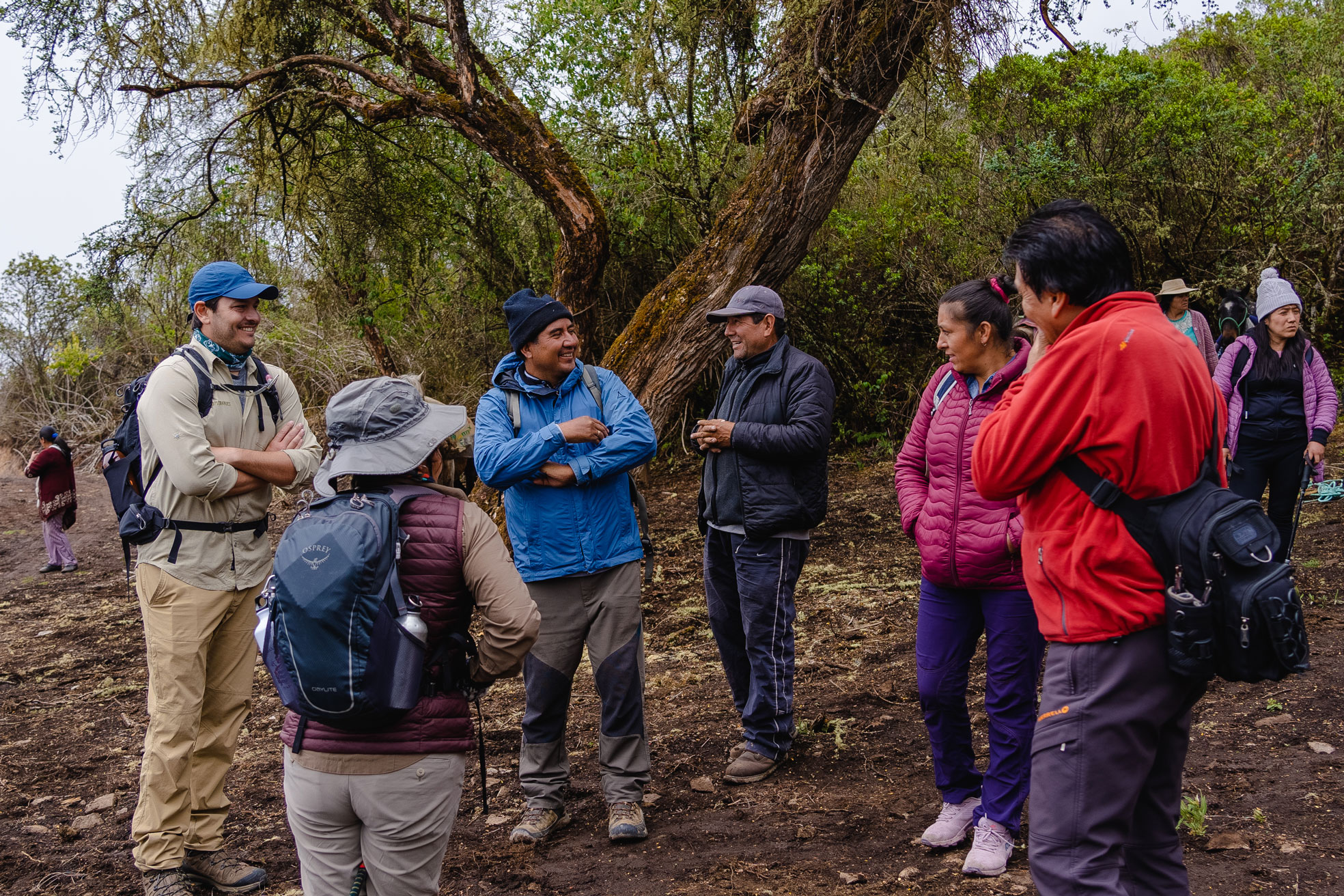
From the beginning, local communities were part of how those trips worked. Explorandes trained and hired people living along the routes as porters, muleteers, cooks, and field staff, while learning from their knowledge of the mountains, agriculture, plants, and local culture.
Over five decades, the company has continued to evolve. What began primarily as an expedition and trekking business now includes cultural journeys, nature-based travel, birding, biking, and softer adventure experiences.
How Explorandes Is Making A Positive Impact
Explorandes’ trips create paid work across a large network of rural service providers in Cusco and Ancash. Its trekking operations work with guides, porters, muleteers, cooks, and local suppliers, with much of that work concentrated in high-Andean campesino communities that have limited access to formal employment and markets.
Approximately 142 independent rural service providers sit at the center of this network, and around 92% come from high-Andean campesino communities. Through its trekking operations, Explorandes directs spending toward local labor, food suppliers, transport, and other services that make these journeys possible.
The company is also increasingly focused on how tourism can spread beyond Peru’s most crowded routes. Rather than simply bringing more people to the same places, Explorandes is developing experiences in side valleys, conservation areas, and lesser-visited landscapes around the Sacred Valley. The idea is to give travelers more reasons to stay longer and direct tourism income toward communities and places that currently see fewer visitors.
That same thinking shapes Explorandes’ approach to the Inca Trail. The company runs its classic trek over five days rather than compressing the experience into the more common four-day format, giving travelers more time on the trail and a less rushed arrival at Machu Picchu. It has also developed the Hidden Valleys of Salkantay after stepping away from the increasingly crowded traditional Salkantay route.
Environmental responsibility has been part of Explorandes’ work for decades. The company previously operated under ISO 14001 environmental standards and Rainforest Alliance certification and is now a Certified B Corporation. It also works with conservation organizations, protected-area authorities, and rural communities across landscapes including the Historic Sanctuary of Machu Picchu and Huascarán National Park.
In the Hidden Valleys of Salkantay, Explorandes has a long-term agreement with the Misquiyaco campesino community connected to the roughly 1,800-hectare Misquiyaco-Urpaypuquio Communal Private Conservation Area. The partnership links tourism with the protection of the surrounding landscape and creates another economic reason to keep these areas conserved.
Why the UnTours Foundation Invested in Explorandes
There is a natural connection between Explorandes and the UnTours Foundation.
Explorandes was founded by Alfredo Ferreyros in 1975, the same year Hal Taussig founded UnTours. Both were built around ideas about travel that were unconventional at the time. Alfredo believed travelers would pay to walk through the Andes and experience Peru more deeply. Hal believed travelers would value slower stays, local connection, and a different relationship with the places they visited.
Both companies have now been operating for more than 50 years, and both were shaped by founders willing to do things differently long before responsible tourism became a widely used term. That connection is even stronger today: UnTours became the world’s first Certified B Corporation, and Explorandes is now a B Corp as well.
That shared history is a big part of why this investment feels so aligned. Explorandes has spent five decades creating economic opportunities in rural communities while protecting the landscapes and cultural heritage on which its trips depend. Its work with local entrepreneurs, communities, conservation partners, and land managers reflects the kind of tourism the UnTours Foundation was created to support.
Our investment supports improvements at Explorandes’ Chamana Camp, a private site serving trekking routes connected to the Inca Trail and the Hidden Valleys of Salkantay. The project will improve the camp’s kitchen and dining areas, bathrooms and showers, landscaping, furniture, and other infrastructure used by travelers and field teams.
The design follows the same philosophy. Plans incorporate locally appropriate materials and techniques, including adobe reuse, reinforced earth, native and productive vegetation, and landscaping designed to fit the surrounding Andean environment.
Chamana also gives Explorandes more flexibility to design a different kind of trekking experience: one that is less rushed, better supported, and more connected to surrounding communities and landscapes. By improving the site, Explorandes can continue strengthening the experience for travelers while supporting the guides, porters, muleteers, cooks, suppliers, and communities that make those journeys possible.
For us, Explorandes feels like a natural extension of the values that have shaped UnTours for half a century: travel that is more local, more thoughtful, and more accountable to the people and places that make it possible.
How You Can Support Explorandes
If you are traveling to Peru and want to experience the country beyond its cities and major landmarks, consider exploring the Andes with Explorandes.
Its journeys range from the Inca Trail to Machu Picchu and the Hidden Valleys of Salkantay to longer expeditions through the Cordillera Blanca and Huayhuash. Travelers can also explore cultural, nature-based, and soft-adventure experiences designed to reach lesser-visited places and spend more time understanding the landscapes and communities that make Peru unique.