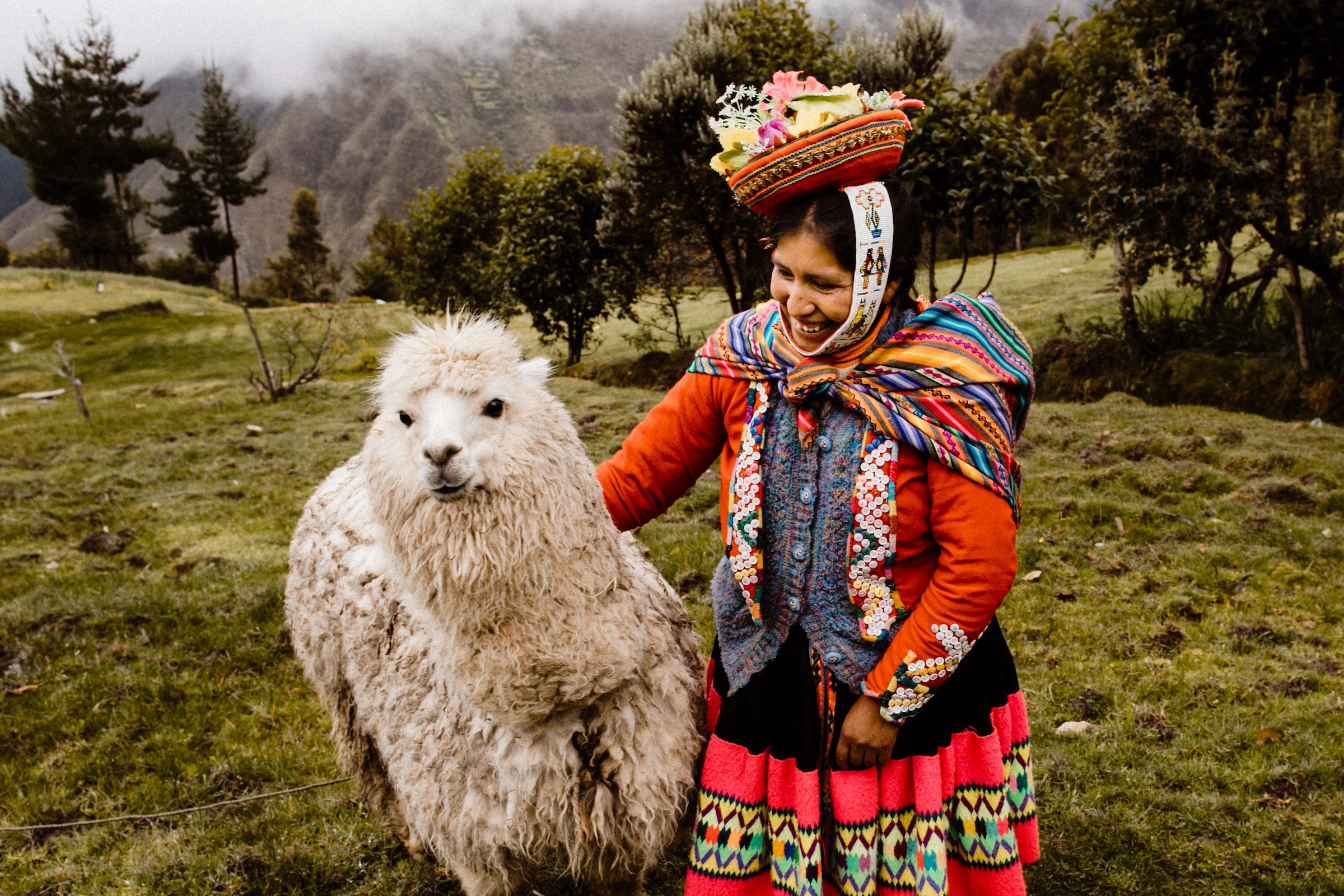
Awamaki works with Indigenous Quechua women in Peru’s Sacred Valley to help turn traditional textile skills into stronger, more reliable income. The organization partners with women-led cooperatives that spin, weave, knit, and sew, helping them reach new customers while keeping the work rooted in their own communities.
Today, Awamaki works with approximately 180 women across nine cooperatives around Ollantaytambo. It supports the cooperatives with product development, quality control, financial management, and business training, while also helping bring their work to market through a local shop, online sales, and wholesale partnerships. The goal is for each cooperative to build the skills and customer base to become increasingly independent over time.
Tourism is another important part of the model. Awamaki works with artisan partners to organize weaving visits, meals, homestays, and other cultural experiences where the women help decide how visitors are welcomed and how the experience is run. Artisans are paid for their time, and the structure gives them more control over how their traditions and communities are shared with travelers.
The Awamaki Origin Story
Kennedy Leavens first came to Ollantaytambo as a teenager in 2001. The experience stayed with her, shaping her decision to study international development and eventually bringing her back to Peru after university. There, she began working with a small group of women weavers from Patacancha, alongside Peruvian colleague Miguel Galdo.
When the organization supporting that group closed, Kennedy and Miguel founded Awamaki in 2009 with 10 women weavers so the work could continue. What began as a small effort to support one cooperative quickly grew around a larger challenge: Quechua women held deep knowledge of spinning, weaving, dyeing, and textile traditions, but often had limited access to markets and few ways to turn those skills into reliable income without leaving their communities.
Awamaki began building the bridge between those traditions and new economic opportunities. The organization worked with cooperatives on product quality, collaborative design, business skills, and access to customers in Peru and abroad. Over time, sustainable tourism became another part of the model, giving women additional ways to earn income by sharing textile traditions, food, and community life directly with visitors.
How Awamaki Is Making A Positive Impact
At the heart of Awamaki’s work is women’s economic independence. More than 70% of its artisan partners had no income before joining a cooperative. Today, 69% report making financial decisions jointly with their partners, and nearly all women with school-age children identify education as their top household expense.
That income is built around skills women already hold and want to continue practicing. Awamaki works with partner cooperatives on product development, quality control, technical skills, financial management, and business leadership, helping women strengthen their businesses and build relationships with customers beyond Awamaki itself. The goal is long-term independence, not ongoing dependence on the organization.
Tourism creates another pathway for that same work. Cooperatives decide how visits are organized, share hosting opportunities through their own rotation systems, set guidelines around photography, and are compensated for their time whether or not a visitor purchases a textile. Through weaving demonstrations, shared meals, cooking, and homestays, women can earn income by sharing knowledge and traditions on terms shaped by the communities themselves.
Together, these programs create more ways for women to earn from traditional spinning, natural dyeing, knitting, and backstrap-loom weaving without having to leave their communities behind. The result is not only greater access to income, but stronger conditions for those skills, businesses, and cultural practices to continue across generations.
Why the UnTours Foundation Invested in Awamaki
The UnTours Foundation invested in Awamaki through the Meaningful Travel Fund, our partnership with Tourism Cares, created to provide affordable capital to locally rooted tourism enterprises that are strengthening communities, preserving cultural heritage, and creating more meaningful visitor experiences.
Awamaki is a strong example of that vision. Its work connects tourism and fair trade directly to the economic independence of Indigenous Quechua women while giving artisan partners greater control over how their culture, skills, and communities are shared with visitors.
Our investment supports Awamaki’s new Artisan Center, which will create a more accessible place for artisans to meet travelers, demonstrate their work, teach textile techniques, and sell products directly. Many of Awamaki’s partner communities are located hours from the main tourism routes around Ollantaytambo and Machu Picchu, making it difficult for some women to participate regularly in tourism. The Center is designed to help bridge that gap. The space will include retail and demonstration areas where visitors can see different stages of Andean textile production, from preparing raw fiber and spinning yarn to natural dyeing and weaving on a backstrap loom. It will also give cooperatives a shared place for learning, collaboration, and connecting directly with customers.
Awamaki is also featured on Tourism Cares’ Meaningful Travel Map, which connects the travel industry with community-led enterprises and experiences creating positive social and environmental impact. That connection became especially relevant in 2026, when Tourism Cares brought its Global Meaningful Travel Summit to Peru, with programming across Lima, Cusco, and the Sacred Valley focused on how tourism can create more value for local communities while protecting culture and place.
Supporting Awamaki through the Meaningful Travel Fund builds directly on that shared vision. The investment helps expand market access for Quechua women artisans while strengthening a tourism model in which communities have a meaningful role in how visitors engage with their culture. By creating more ways for artisans to benefit from tourism on their own terms, Awamaki is helping ensure that economic opportunity and cultural continuity can grow together.
How You Can Support Awamaki
If you are traveling through Peru’s Sacred Valley, consider spending time with Awamaki and its artisan partners. Visitors can take part in traditional weaving experiences, cooking classes, community visits, and overnight stays that offer a deeper connection to Quechua culture and everyday life in the Andes.
You can also support the cooperatives by purchasing Awamaki’s fair trade textiles and handmade products through its shop in Ollantaytambo or online. For those who want to support the work more directly, Awamaki also accepts donations toward its programs and the development of the new Artisan Center.